Skip to content
Student development, cognitive skills and mentorship since 2011
For individual

A clearer path to learning and personal growth.

Explore each training option below. See what it involves, how practice works and which questions to discuss with BEL.

01

Brain Activation Training

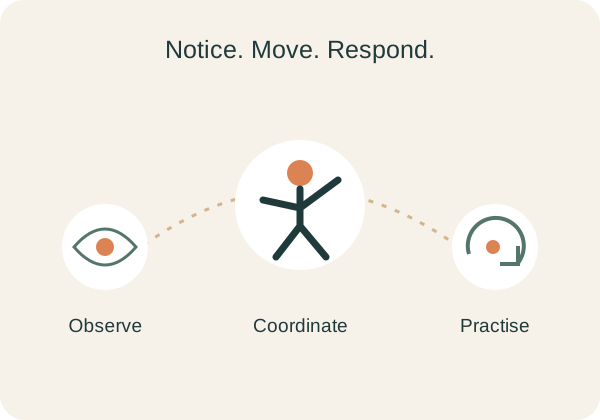
Brain–body coordination, observation and response practice.

BEL learning activity: Brain Activation Training

What it involves

Learners practise movement patterns, observation and quick responses through guided activities. Each task brings attention and brain–body coordination together.

The trainer demonstrates each step and gives time to try again. Activities are adapted to the learner’s age and comfort.

We explain the practice needed between sessions, so parents can offer encouragement without making it feel like another test.

Before you begin

Ask how activities are adapted to age, the practice routine and the trainer support included.

Check suitability

02

Sensory and Coordination Training

Notice, respond and practise with guidance.

BEL learning activity: Sensory and Coordination TrainingObserve a pattern, coordinate movement and practise a response.

What it involves

Learners practise noticing visual details, following cues and coordinating movement. Activities are guided and suited to their age.

The trainer explains each task and allows time to repeat it comfortably. Learners can ask for help and work at a suitable pace.

We discuss supervision, materials and individual needs beforehand. This is educational training; medical or developmental concerns need qualified professional advice.

Before you begin

Check the activity format, supervision, any kit requirements and whether it is suitable for the learner.

Check suitability

03

Focus and Memory

Give learning a practical system.

BEL learning activity: Focus and MemoryOne idea connected to association, visualisation, mind mapping and planned recall.

What it involves

Give learning something to connect to. Stories, visualisation and mind maps help learners organise ideas and practise remembering them.

Students try the methods with study material, then recall what they have learned. Short revision routines help them revisit difficult ideas.

We start with current study habits and suggest methods the learner can use during an ordinary school week.

Before you begin

Discuss practice sheets, revision activities and how the methods can fit the learner’s daily routine.

Discuss memory training

04

Confidence and Counselling

Work on the patterns behind participation.

BEL learning activity: Confidence and Counselling

What it involves

Knowing an answer and feeling ready to share it are different things. We begin by listening to what makes participation feel difficult.

Supportive conversation and constructive self-talk are paired with small practice steps, such as asking a question or explaining an idea.

We discuss the right support for the concern and how families can encourage the learner. Specialist support is suggested when appropriate.

Before you begin

Discuss the concern, the appropriate counselling format and when specialist support may be more suitable.

Start a confidence conversation

05

Career Mapping and Guidance

Understand options before choosing a direction.

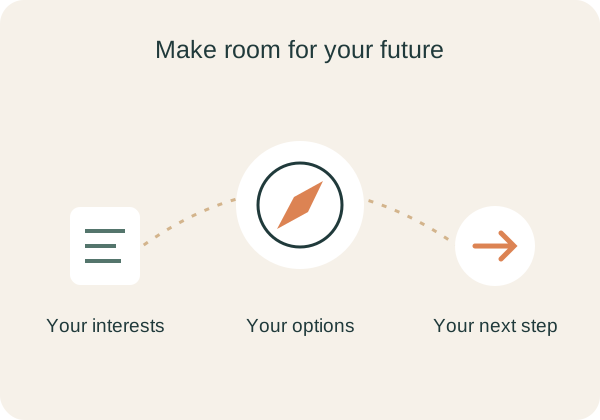
BEL learning activity: Career Mapping and GuidanceExplore interests, compare possibilities and plan a next step.

What it involves

Choosing a direction starts with understanding the student. We discuss interests, school experiences and the questions behind their choices.

Relevant assessments add to the conversation. Together, we explore subjects, courses and career routes in clear, practical terms.

Students leave with next steps to explore: compare courses, check entry requirements or try an activity connected to an interest.

Before you begin

Ask which assessments are proposed, what the guidance discussion covers and what next-step planning is included.

Book a guidance conversation

06

Student Mentorship

Build habits with continued support.

BEL learning activity: Student Mentorship

What it involves

Building a habit takes more than one good session. Mentorship offers continued guidance with focus, memory, study planning and confidence.

Learners practise skills, use them in schoolwork and discuss what feels difficult. Regular feedback helps them keep moving forward.

For institutions, we agree the yearly schedule, resources and review points together. Parents and educators can support practice between sessions.

Before you begin

Discuss the schedule, home practice, review points and parent or educator coordination.

Explore ongoing support

Start a conversation

Take the next step with BEL.

Code Calibre